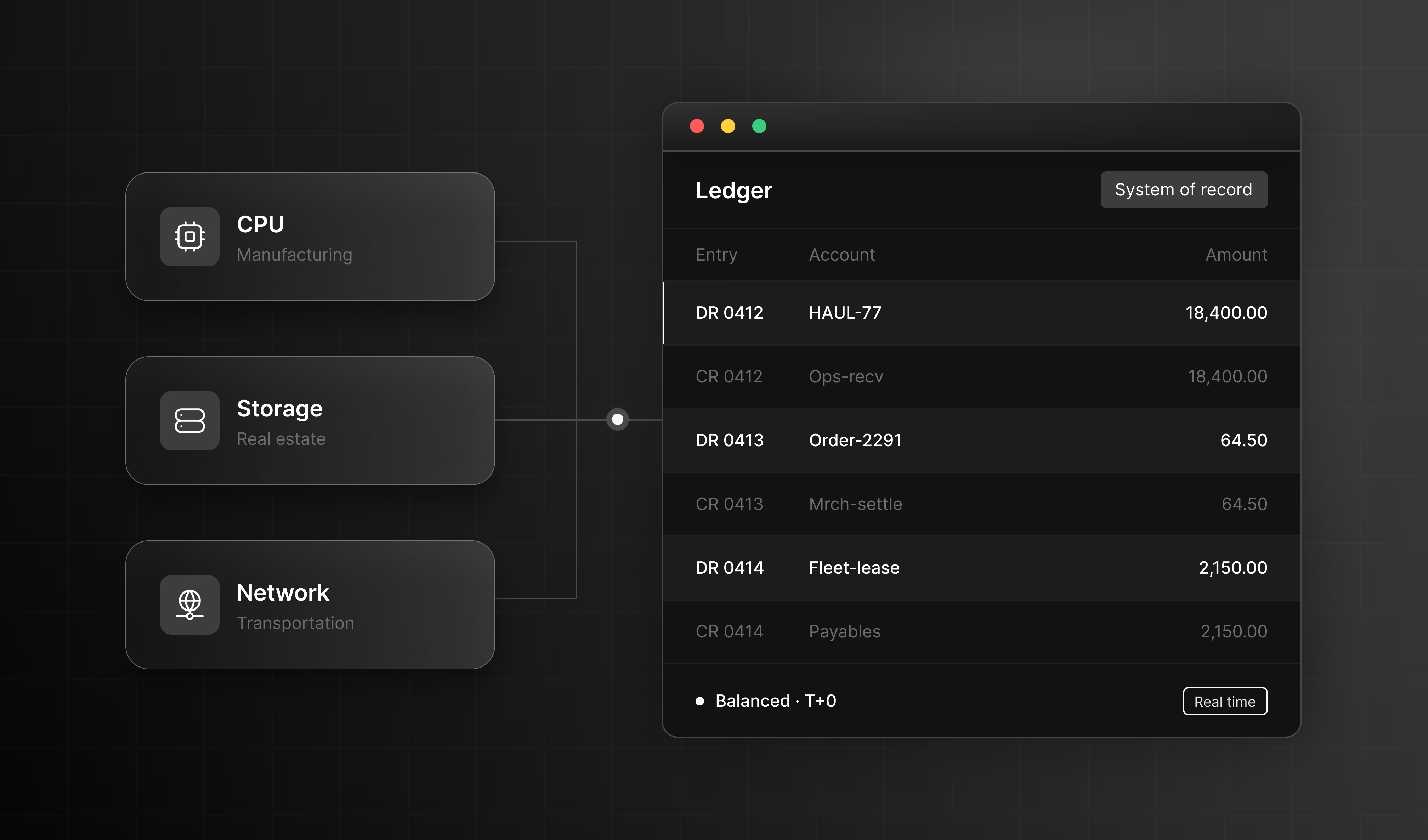
Yesterday, Travis Kalanick closed a USD 1.7 billion round for Atoms, led by Andreessen Horowitz, with Ben Horowitz joining the board and Uber, the company that pushed him out in 2017, among the investors. Atoms folds together CloudKitchens, the ghost kitchen business he has run since leaving Uber, and Pronto, the heavy-industry automation firm he acquired in March, and its divisions target mining, heavy transport and food production. Kalanick describes the project as building "atoms-based computers where CPU is manufacturing, storage is real estate, and network is transportation". Take the metaphor seriously and one component is conspicuously absent. A computer has to keep an accurate record of its own state. In the physical economy that record is financial, and the system that keeps it is ledger infrastructure.
Every movement of atoms is a financial event
When an autonomous haul truck brings ore out of a pit, a contract gets partially discharged and a receivable accrues. When a robotic kitchen fires an order at 11pm, a merchant settlement, a courier payout and a platform fee come into existence in the same second. Atoms' operations already span autonomous mining, logistics and food robotics across more than 110 cities, so that second repeats thousands of times a day, across time zones. Each cycle a machine completes produces entries that something has to book, immediately and correctly, or the operator's view of its own business starts to drift from reality.
The capital is arriving faster than the operating models are settling. Robotics startups raised USD 18.8 billion globally in 2026 by late June, already above the USD 15 billion raised in all of 2025. The a16z memo backing the round argues that within a generation, robots will do most of the menial work of transforming, moving and storing atoms. Every one of those tasks, performed commercially, is also a billable event. Transaction volume in the atoms economy will be machine-paced, and machines don't observe business hours.
Most financial systems were designed around human rhythm: batch files overnight, reconciliation at end of day, an operations analyst chasing breaks the next morning. That rhythm assumed the business slept. Autonomous fleets run through the night, and when the record of what happened trails the events by a day, the operator is pricing, lending and reporting against stale numbers.
Ledger infrastructure at machine speed
What machine-paced commerce needs from its books is specific. Double-entry accounting, so every debit carries a matching credit and totals can't quietly drift. Real-time balance updates, so a position is known the moment an event posts rather than after tonight's batch. Immutable audit trails, because a regulator examining an autonomous operation will want a tamper-proof sequence of what happened and when. Programmable rules, so a completed haul or a delivered order posts its own entries the instant it fires, with no human keying anything. That's the job of ledger infrastructure built for financial products, and it's the layer that lets everything above it (lending against equipment, metering output, settling supply chains) run at the same clock speed as the machines.
Kalanick spent eight years building in stealth before putting a name on any of this. The robots will collect the headlines. Whether the businesses running them make money will be decided somewhere less photogenic, in whether the books can keep up with the fleets.